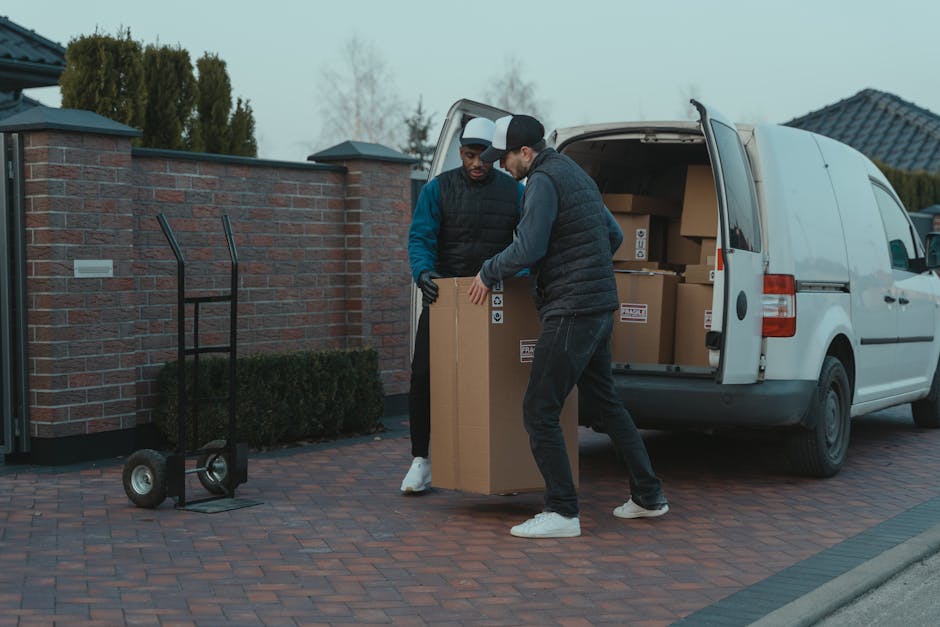
Smitham Station man and van access tips for local moves
If you are planning a local move near Smitham Station, the tricky part is rarely the lifting alone. It is the access. Tight roads, rail-side traffic, short-stay parking, awkward kerbs, and neighbours who also need space can turn a simple man and van job into a slow, stressful afternoon. That is exactly why Smitham Station man and van access tips for local moves matter: they help you plan the van arrival, loading point, route, and timing so the move runs smoothly rather than chaotically.
In practice, a good local move near a station is about reducing friction. You want the van as close as possible, the walk from door to vehicle as short as possible, and the loading sequence to be calm and efficient. Sounds obvious, but to be fair, the small details decide whether your move feels organised or like everyone is improvising in the rain. This guide walks you through those details properly, with practical advice you can actually use.
For broader help with services and planning, it can also be useful to understand what a standard man and van service covers and how it compares with larger-scale moving options. A lot depends on the size of your load, the street layout, and whether you are moving on a weekday morning or a quiet Sunday.
Table of Contents
- Why Smitham Station man and van access tips for local moves Matters
- How Smitham Station man and van access tips for local moves Works
- Key Benefits and Practical Advantages
- Who This Is For and When It Makes Sense
- Step-by-Step Guidance
- Expert Tips for Better Results
- Common Mistakes to Avoid
- Tools, Resources and Recommendations
- Law, Compliance, Standards, or Best Practice
- Options, Methods, or Comparison Table
- Case Study or Real-World Example
- Practical Checklist
- Conclusion
- Frequently Asked Questions
Why Smitham Station man and van access tips for local moves Matters
Access is one of those things people underestimate until the van is already outside. Near Smitham Station, you may be dealing with station traffic, school-run pressure, limited kerb space, narrow residential streets, or a property set back from the road. If the van cannot stop sensibly and safely, every other part of the move slows down.
That matters for several reasons. First, it affects speed. A short carry from van to front door can save a surprising amount of time. Second, it affects cost if your quote is based on time or labour. Third, it affects safety. Carrying a wardrobe or washing machine across a busy pavement in a hurry is not a clever plan, really. And fourth, it affects how tired you feel by the time you have reached the last box, which is often the part people forget about until they are there.
Station-adjacent moves also tend to have more moving parts. Trains come and go, pedestrians cross constantly, and parking can disappear very quickly. If you are trying to squeeze a move into a busy slot, even ten minutes of poor access can snowball into half an hour of faffing around. Not fun.
Good access planning is not about being over-cautious. It is about being realistic. The best local moves usually begin with a proper look at where the van can wait, where it can load, and how the team will carry items without blocking the road or annoying half the street.
How Smitham Station man and van access tips for local moves Works
At a practical level, the process is straightforward. You assess the property, work out the best stopping point for the van, estimate the walking distance from the door to the vehicle, and decide whether any permissions or timing adjustments are needed. Then you build the move around that access plan.
In a typical man and van arrangement, the driver may arrive in a vehicle such as a moving van or similar local removal vehicle sized for domestic loads. The smaller and more manoeuvrable the vehicle, the easier it is to handle station-area streets. That said, a smaller van is not always enough for larger home moves, so the right option depends on what you are moving and how quickly you want it shifted.
The access plan usually covers:
- the best arrival time
- the safest loading point
- whether one-way streets or traffic flow create delays
- how far items must be carried
- stairs, lifts, tight hallways, or garden routes
- parking availability and any likely restrictions
You will notice the difference quickly when it is done properly. Instead of improvising at the kerb, the move feels like a sequence: park, load, secure, depart. Simple. Efficient. Much less stressful.
If your move involves furniture only, especially single bulky items, a service like furniture pick-up can be a sensible fit. If it is a full household move, the access planning needs a bit more care.
Key Benefits and Practical Advantages
Getting the access right near Smitham Station gives you more than just convenience. It can genuinely improve the whole moving day.
- Less carrying distance: Fewer steps between home and van means less time, less strain, and less risk of damage.
- Better scheduling: When arrival and loading are planned, you are less likely to run late or block the street.
- Lower stress: People move better when they are not constantly negotiating parked cars, rail traffic, and narrow access points.
- Safer handling: Heavy items are easier to control when the route is short and clear.
- More accurate quotes: A proper access description helps remove nasty surprises later.
- Cleaner handover: Fewer delays usually mean a tidier, calmer move-in and move-out experience.
One small but real benefit is communication. If you know the access conditions ahead of time, you can tell the mover exactly what to expect instead of saying, "It should be fine," which, let's face it, is the phrase that often starts the whole mess. A clear handover helps everyone.
For local domestic jobs, the value of good planning often shows up in the final 20 minutes of the job. That is when the van is loaded, the last bag is going in, and nobody wants to be standing in a road with a bed frame while wondering where the driver can legally stop.
Who This Is For and When It Makes Sense
Smitham Station access tips are useful for anyone moving within the nearby area or to a property that sits on a busy local route. But some people need them more than others.
This approach makes particular sense if you are:
- moving from or to a flat near the station
- dealing with a narrow residential street
- moving at peak commuting times
- handling a small to medium house move
- moving furniture, boxes, and white goods on a short timeline
- trying to avoid a large removal lorry where the road layout simply would not suit one
It is also helpful for landlords, tenants, students, and downsizers. If you are only shifting a few rooms' worth of items, a man and van setup can be more practical than hiring a full removal team. Equally, if you are moving a family home, you might still use man and van help for a staged move, storage transfer, or those awkward items that need a separate run.
In our experience, people often ask themselves, "Do I really need to worry this much about access?" The honest answer is yes, if the street is tight, parking is limited, or the property sits close to the station. Those are the moves where a little planning pays off immediately.
Step-by-Step Guidance
Here is a practical way to plan a station-area move without overcomplicating it.
1. Walk the route before moving day
Stand outside your property and look at the route from the front door to the nearest sensible stopping point. Check for bollards, narrow gates, steps, parked cars, low branches, and anything that would make carrying awkward. If the route looks fine in daylight but odd at dusk, that is worth noting too. Evening shadow can hide small trip hazards.
2. Measure the carrying distance roughly
You do not need surveyor precision. Just a practical sense of whether the van can stop 5 metres away, 20 metres away, or a lot further. That difference matters. Short carries are manageable; long carries with furniture and stairs become tiring very quickly.
3. Think about the item mix
Boxes are easy to stack and move. Sofas, mattresses, wardrobes, and washing machines are a different story. If your move includes awkward items, tell the mover early so they can plan the loading order and decide whether extra protection or more than one person is needed.
4. Time the arrival carefully
Near a station, timing is often half the battle. A very early start can be quieter, but not always ideal if residents are still parking up from the night before. Mid-morning can be calmer on some streets, but commuter traffic may still be busy. Think about the local rhythm, not just your own schedule.
5. Confirm parking options
Do not assume there will be a convenient space outside the property. Check what is realistic on the day and have a Plan B. Sometimes the best solution is a nearby legal stopping point plus a short carry. Not glamorous, but effective.
6. Prep the property for faster loading
Keep hallways clear, label boxes, disconnect appliances early, and move small loose items into one place. If a mover has to hunt for the last kettle bag while standing on the pavement, progress slows. It always does.
7. Protect the most vulnerable items
Wrap delicate items, pad corners, and use covers for mattresses or upholstered pieces where possible. A station-area move can mean more stopping and starting, more door openings, and more chances for minor knocks. Good preparation reduces that risk.
8. Brief everyone before the van arrives
Make sure anyone helping knows where to stand, which items go first, and whether you are leaving keys, documents, or appliances until last. A two-minute briefing can save a lot of wandering around later.
9. Do a final sweep
Before the van leaves, check cupboards, loft access, sheds, chargers, and under beds. That strange last-minute scramble for the TV remote or the paperwork folder is painfully common. It happens more than people admit.
Expert Tips for Better Results
Small adjustments can make a real difference on a move near Smitham Station. These are the things that tend to separate a smooth job from an irritating one.
- Book for the quietest practical window. If your move date is flexible, choose a slot that avoids obvious commuter pressure.
- Use one staging area inside the home. Boxes gathered in one room move out far quicker than scattered items across the property.
- Keep a "first load" pile ready. Things like tools, bedding, documents, and essentials should not be buried under the last wardrobe box.
- Ask about van size honestly. Bigger is not always better near tight access, but too small means extra trips. There is a balance.
- Check the weather forecast. Rain changes everything. Wet pavements, slippery steps, and damp boxes are no one's idea of efficiency.
- Use clear labels. "Kitchen," "Fragile," and "Open first" are boring labels, yes, but they save time when the van is packed and the day gets noisy.
Another useful tip: keep one box with the things you will need first night, and do not let it disappear into the back of the van. That box should stay visible. Toothbrush, kettle bits, chargers, tea bags, the basics. Nothing fancy, just sensible.
And if your property has awkward access, it is often worth taking a photo of the entrance and parking area in daylight. A quick photo sent ahead can be much more helpful than three paragraphs of "it's fine, honest."
Common Mistakes to Avoid
Most access problems come from a handful of predictable mistakes. Avoiding them can save time, money, and a fair bit of irritation.
- Assuming the van can park outside. It might be possible, or it might not. Check first.
- Underestimating walking distance. Ten extra metres is nothing for one box, but a lot for twenty trips.
- Forgetting road traffic patterns. Station roads can change character fast at certain times of day.
- Not warning about stairs or tight corners. A narrow stairwell changes the loading plan immediately.
- Leaving packing until the last minute. That leads to rushed loading and lost items.
- Choosing the wrong vehicle size. Too large can be hard to manoeuvre; too small means unnecessary repeat trips.
- Ignoring what happens after unloading. If there is nowhere to stand the furniture once it reaches the new property, unloading gets messy.
One more thing people miss: rubbish and disassembly waste. Old packaging, broken shelves, and unwanted bits can clog the walkway if nobody has planned for them. A clean loading route is a calmer route. Simple as that.
Tools, Resources and Recommendations
You do not need a giant kit to manage a move near Smitham Station, but a few things make life easier.
- Tape measure: useful for checking sofa widths, door clearances, and awkward gaps.
- Furniture blankets and covers: help protect items from scratches and scuffs.
- Trolley or sack truck: handy for boxes and heavier loads if the route is smooth enough.
- Labels and marker pens: keep boxes organised and speed up unloading.
- Strong tape and basic tools: useful for dismantling beds or removing shelves.
- Phone camera: ideal for recording access points, stairs, parking spots, or anything a mover needs to know in advance.
For more planning support, it may help to review service pages such as removal services, home moves, or house removals if your local job is part of a bigger move. If packing support would reduce stress, packing and unpacking services can be worth looking at too.
For people comparing moving options, the broader removals and removal company pages can help you think through the difference between a smaller man and van job and a fuller relocation service.
Law, Compliance, Standards, or Best Practice
Any local move near a station should be handled with sensible attention to parking, pedestrian access, and safety. Exact parking rules can vary by road and by local authority arrangements, so it is wise not to assume. If you need to stop on a restricted street, loading bay, or permit-controlled area, check the local requirements before moving day rather than trying to sort it out at the kerb while everyone is waiting. That conversation rarely gets friendlier under pressure.
From a best-practice perspective, a mover should aim to:
- keep walkways as clear as possible
- avoid blocking driveways, crossings, or access for other residents
- lift and carry items safely with suitable help where needed
- secure items properly in the vehicle
- use reasonable care around walls, doors, and shared areas
On the customer side, it helps to be accurate about access conditions, parking limits, and any awkward items. If there are stairs, no lift, long carries, or restricted stop times, say so early. That is not being difficult. It is being useful.
Some companies will also reference their own service standards, insurance, payment handling, or complaint procedures. If you want to understand those basics before booking, pages such as insurance and safety, payment and security, and terms and conditions are worth reading through. That kind of homework is not glamorous, but it is sensible.
For people who care about how a provider handles its responsibilities more broadly, the site's health and safety policy, privacy policy, and about us pages can add reassurance. Small detail, perhaps, but it matters when you are trusting someone with your home contents.
Options, Methods, or Comparison Table
Not every local move needs the same setup. Here is a simple comparison to help you choose the right style of help for a Smitham Station-area move.
| Option | Best for | Access advantage | Possible downside |
|---|---|---|---|
| Man and van | Small to medium local moves, a few bulky items, quick same-day jobs | Usually more manoeuvrable on tight station roads | May require multiple trips if the load is larger than expected |
| Full removals team | Whole-house moves, larger family loads, more complex moves | More hands for stairs, packing, and heavier furniture | Sometimes less flexible around very tight parking or narrow access |
| Self-hire van | Confident movers with time to manage loading themselves | You control timing completely | Can be stressful if parking, lifting, or route planning goes wrong |
| Hybrid approach | Mixed jobs, staged moves, storage runs, or awkward item moves | Flexible and often practical | Needs clear planning so the different parts line up |
For many local customers, the man and van option is the sweet spot. It is often nimble enough for nearby station streets without being overkill. If you are weighing up vehicle sizes, a page like man with a van or man with van removal can help frame the decision a bit better.
If your move crosses into a more business-like setup, perhaps an office or mixed-use property nearby, then office removals and commercial moves may be more relevant than a standard domestic service. Different job, different rhythm.
Case Study or Real-World Example
Picture a small flat move near Smitham Station on a weekday morning. The occupant has a sofa, a bed frame, a washing machine, six boxes, and a couple of fragile bags. The road is busy around the usual commuting window, and parking outside the building is not guaranteed.
Instead of arriving and hoping for the best, the mover and customer agree in advance on a nearby stopping point with the shortest safe carry. The bed frame is dismantled before the van arrives, boxes are grouped by room, and the washing machine is placed near the exit with the hose disconnected early. The van arrives, loads the bulky items first, then the boxes, then the soft bags.
What changed? Nothing dramatic. No magic. Just access planning. The move stayed orderly because everybody knew where the van would stop and how the carrying route would work. There were still a few minor pauses, because moving houses always has a few odd moments, but the day stayed manageable. That is the goal, really.
Compare that with an unplanned move: van circling for parking, boxes scattered around the hallway, one person holding a door open while another searches for a trolley, and somebody saying, "I thought the parking was usually okay here." That version is much less charming.
Practical Checklist
Use this checklist before a Smitham Station local move. It is deliberately simple, because simple gets used.
- Confirm the moving date and arrival window
- Check where the van can legally and safely stop
- Note any station traffic or school-run pressure
- Measure or estimate the carry distance
- Identify stairs, lifts, narrow hallways, or gates
- Tell the mover about bulky or fragile items
- Prepare labels for boxes and priority bags
- Clear the hallway, entrance, and loading route
- Disconnect appliances and empty drawers where needed
- Keep essentials separate for the first night
- Have a backup parking or waiting plan
- Check payment, insurance, and service details in advance
Quick takeaway: if the access route is clear, the move is easier. If the access route is uncertain, everything else takes longer. That is the whole game, more or less.
Conclusion
Smitham Station man and van access tips for local moves come down to one simple idea: make the route from property to vehicle as predictable as possible. That means checking parking, timing the arrival, reducing carry distance, and being honest about awkward access before the van turns up. The better the access, the calmer the move.
If you remember only one thing, let it be this: local moves go best when the practical details are sorted early, not when everyone is already standing in the road with a clock ticking. A little planning makes a proper difference, and it is usually the difference between a tiring day and a manageable one.
If you are weighing up the right service for your move, it may help to review pricing and quotes alongside your route and access needs, then choose the option that fits the job rather than just the headline price.
Get a free quote today and see how much you can save.
And once the boxes are in, the van has gone, and the door finally shuts behind you, there is always that small, lovely pause. The hard bit is done. Breathe out.
Frequently Asked Questions
What is the best time for a man and van move near Smitham Station?
The best time is usually the quietest practical window for your street, which may be mid-morning, early afternoon, or another slot that avoids commuter pressure. The ideal timing depends on parking, nearby traffic, and how busy the station area is on that day.
Do I need to reserve parking before moving day?
Not always, but you should check whether parking is likely to be available outside or close to the property. If the road is tight or restricted, planning a backup stopping point is sensible. It is much better to know that in advance than to discover it with a loaded van waiting outside.
How much access space does a man and van need?
That depends on the size of the vehicle and what is being moved. A standard local van usually needs enough room to stop safely, open doors, and allow loading without blocking traffic or pedestrian routes. If access is especially tight, tell the mover early so they can judge whether a smaller vehicle or different timing is better.
What should I tell the mover about my property access?
Tell them about parking restrictions, stairs, long carry distances, narrow entrances, gates, lifts, and any awkward turning points. If you can share a quick photo of the entrance or road, even better. Honest information saves time and avoids frustration later.
Is a man and van better than a full removal team for a local move?
For smaller local moves, yes, often it is. A man and van can be more flexible and easier to park near tight streets. For larger homes or more complex moves, a fuller removal team may be the better fit because there are more hands and more capacity.
Can I use a man and van service for just one or two bulky items?
Yes, that is a very common use case. Sofas, beds, wardrobes, appliances, and similar items are often moved this way. A furniture-only job can be much more efficient when the access is planned properly.
What happens if the van cannot park outside?
Usually the team will use the nearest sensible and legal stopping point and carry items from there. That is why access planning matters. A short alternative route can work well if everyone knows it in advance.
Should I dismantle furniture before the move?
If it will make the item safer or easier to move, yes. Beds, some wardrobes, and larger tables often travel better when partly dismantled. Just keep the fittings together in a labelled bag so you are not hunting for screws later. That bit is never fun.
How can I reduce moving time on the day?
Pack early, label clearly, keep hallways clear, and stage items near the exit. Also make sure the access route is ready before the van arrives. A neat loading path saves more time than people expect.
Are there any special risks near station roads?
Yes, mainly traffic flow, pedestrians, short-stay parking, and sudden congestion at busy times. Station areas often have a different pace from quieter residential roads, so it helps to plan with that in mind rather than assuming the street will behave nicely. It usually does not.
What if I am moving in bad weather?
Then access planning becomes even more important. Wet steps, slippery pavements, and damp boxes all slow things down. Use covers where you can, keep pathways clear, and allow extra time for careful handling.
How do I know if I need removal services instead of a man and van?
If you are moving a full household, lots of bulky furniture, or several rooms' worth of contents, broader removal services may be a better fit. If you are moving a smaller load, a few key pieces, or doing a short local transfer, man and van is often enough.
What should I check before accepting a quote?
Check what the price includes, how access affects timing, whether loading and unloading are covered, and whether there are any extra costs for stairs, long carries, or waiting. Reading the service details carefully can prevent awkward surprises later on.
Can I combine my move with packing help?
Yes, and for some people that is the smartest option. If time is tight or the access is awkward, professional packing support can reduce the pressure and help the load go out more quickly on the day. It is one less thing to juggle, which is never a bad thing.
Where can I check a company's policies before booking?
Look for pages covering insurance, safety, pricing, payment, privacy, and terms. Those details help you understand how the company works and what to expect. It is the boring bit, maybe, but the boring bit often saves the day.